Managing sales manually becomes difficult as a business grows. At first, spreadsheets and notes may seem enough, but over time, missed follow-ups, slow replies, and disorganized information can start hurting conversions.
This is why many companies now use sales pipeline management software to organize leads, track customer interactions, and improve sales performance.
Instead of relying on manual work, businesses can automate repetitive tasks, monitor deals in real time, and create a more efficient sales process from start to finish.
In this guide, we will explain how sales pipeline management software works, why businesses use it, and how to get better results from your sales pipeline.
What Is Creator & Brand Pipeline Management Software?
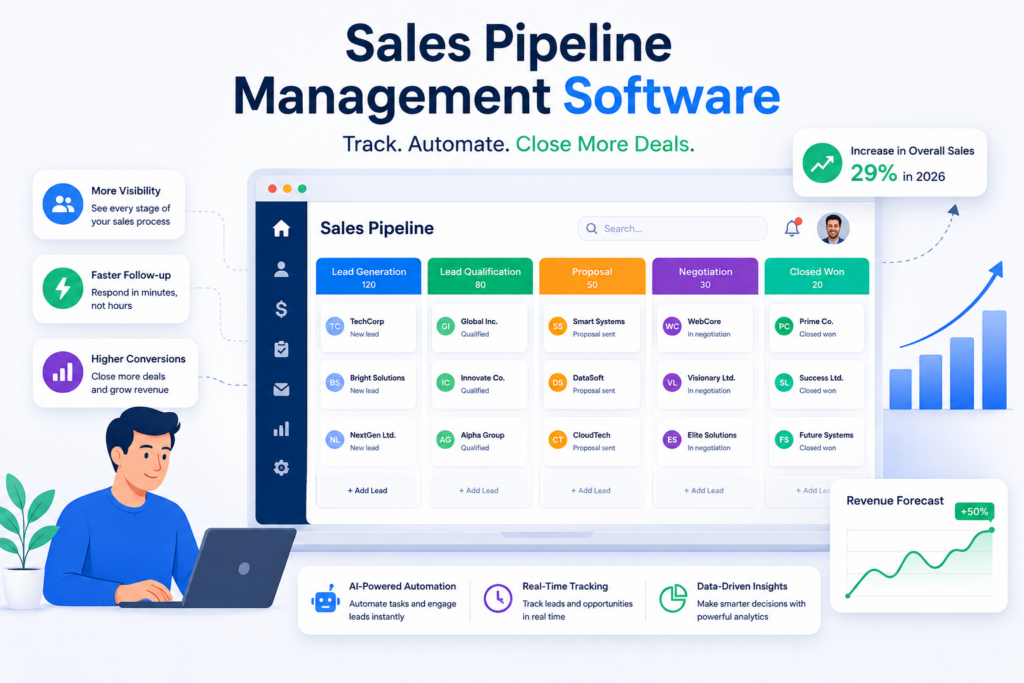
Sales pipeline management software is a tool that helps businesses track potential customers throughout the entire sales process.
The software organizes leads into different stages so teams can clearly see where prospects are in the buying journey and what actions should happen next.
Most platforms also include automation, analytics, reporting tools, reminders, and CRM integrations that help sales teams work faster and stay organized.
Instead of handling everything manually, businesses can manage leads more efficiently and reduce the risk of losing opportunities.
Why Digital Agencies and Businesses Use Pipeline Software
Many businesses struggle with the same sales problems:
- Missed follow-ups
- Slow response times
- Scattered customer information
- Poor visibility across deals
- Inaccurate sales forecasting
Sales pipeline software helps solve these issues by centralizing customer data and automating daily workflows.
This allows teams to spend less time updating spreadsheets and more time building customer relationships and closing deals.
Main Stages of a Social Media & B2B Sales Pipeline
Most sales pipelines follow a similar structure. Understanding these stages helps businesses create a smoother and more organized sales process.
1. Lead Generation
Potential customers enter the pipeline through websites, advertisements, referrals, social media, or outreach campaigns.
2. Lead Qualification
Sales teams determine whether the lead matches the ideal customer profile and has genuine buying potential.
3. Initial Communication
The business contacts the lead through calls, emails, or meetings to better understand customer needs.
4. Proposal or Presentation
Products or services are presented to the prospect along with solutions tailored to their specific problems.
5. Negotiation
Pricing, contracts, timelines, and additional details are discussed before finalizing the deal.
6. Conversion
The prospect officially becomes a paying customer.
7. Customer Follow-Up
After the sale, businesses continue communication to strengthen relationships and improve customer retention.
Benefits of Pipeline Management for Content Platforms
Modern sales tools offer much more than simple contact organization. They help businesses improve productivity, communication, and conversion rates.
Better Visibility Across the Sales Process
One major advantage is having a complete overview of all active deals.
Managers and sales teams can quickly identify:
- Which deals are progressing
- Which leads require attention
- Where prospects are dropping off
- Which team members need support
This visibility helps businesses make better decisions and improve sales performance.
Faster Lead Response Times
Quick communication is essential for improving conversions.
Sales pipeline software allows businesses to automate reminders, notifications, and follow-up sequences to ensure leads receive timely responses.
Many modern sales teams also use an AI-powered solution like an AI agent builder to automate conversations, qualify leads, answer customer questions, and improve communication efficiency throughout the sales process.
Reduced Manual Work
Manual data entry and repetitive tasks can consume a large amount of time every day.
Sales pipeline management software helps automate:
- Lead assignments
- Follow-up scheduling
- Workflow management
- Customer tracking
- Email automation
Businesses can also use an AI agent to handle repetitive customer interactions, lead nurturing, appointment scheduling, and routine communication tasks. This allows sales representatives to focus more on relationship building and closing deals.
Improved Sales Forecasting
Forecasting becomes much easier when customer data is organized in one place.
The software helps businesses monitor:
- Conversion rates
- Deal progress
- Revenue projections
- Team performance
- Sales trends
These insights help companies make smarter business decisions and identify areas that need improvement.
Key Features to Look For in Sales Pipeline Software
Not every sales platform offers the same capabilities. Before choosing a tool, businesses should focus on features that improve workflow efficiency and team productivity.
Automation Features
Automation is one of the most important capabilities.
A good platform should automate:
- Follow-up emails
- Lead tracking
- Notifications
- Task assignments
- Workflow actions
This reduces human error and helps sales teams work more consistently.
CRM Integration
CRM integration allows businesses to store customer information, communication history, and sales activities in one centralized system.
This improves organization and creates a smoother workflow for sales teams.
Custom Dashboards and Analytics
Custom dashboards make it easier to track important sales metrics.
Businesses can monitor:
- Team productivity
- Revenue goals
- Conversion rates
- Pipeline stages
- Sales performance
Clear reporting helps companies improve decision-making and identify bottlenecks more quickly.
Collaboration Tools
Sales often requires collaboration between multiple departments.
Good sales pipeline software should allow teams to:
- Share notes
- Assign tasks
- Track communication
- Collaborate on deals
- Manage workflows together
This improves efficiency and reduces confusion across teams.
How to Get More Value From Pipeline Management Software
Installing software alone is not enough. Businesses that see the best results usually follow several important strategies.
Automate Repetitive Tasks
Automation helps businesses reduce manual work and improve consistency.
Tasks such as follow-up emails, reminders, lead assignments, and workflow updates can all be automated to save time and improve efficiency.
Keep the Pipeline Updated
Sales pipelines should be reviewed regularly.
Removing inactive leads and updating deal stages helps businesses maintain accurate forecasting and better visibility across opportunities.
Monitor Performance Metrics
Tracking performance metrics helps businesses understand what is working and what needs improvement.
Important metrics include:
- Conversion rates
- Response times
- Deal values
- Sales cycle length
- Lead quality
These insights help optimize the sales process over time.
Use AI-Powered Assistance
Many modern businesses now use AI-powered tools to improve customer engagement and automate communication.
Using an AI agent builder allows teams to create automated customer conversations, while an AI agent can manage lead nurturing, appointment scheduling, and follow-up communication automatically.
This helps businesses respond faster, improve customer experience, and increase overall sales efficiency.
Final Thoughts
Sales pipeline management software helps businesses organize leads, automate repetitive tasks, improve follow-up communication, and increase visibility across the sales process.
Instead of relying on spreadsheets and manual tracking, companies can use automation and analytics to create a more efficient and scalable workflow.
Whether the goal is improving response times, increasing conversions, or simplifying sales operations, pipeline management software offers businesses a smarter way to manage customer relationships and close more deals.
