
The latest X Grok update highlights a dramatic transformation in how social media platforms operate in 2026., and few platforms illustrate this shift more clearly than X, the platform formerly known as Twitter. Over the past two years, X has steadily moved beyond its original identity as a micro-blogging service and begun evolving into a broader “everything app” ecosystem that blends social networking, artificial intelligence, publishing, and commerce.
Under the leadership of Elon Musk and a rapidly evolving engineering team, the platform has introduced a series of updates that fundamentally reshape how users interact with content, AI systems, and advertising. The most recent wave of updates includes three developments that appear subtle at first glance but carry significant long-term implications for the future of social media.
These updates include:
- A new privacy toggle that allows users to block Grok from editing uploaded media
- A new experimental advertising format that inserts contextual product mention links
- A Grok-powered audio narration feature for long-form articles
Together, these features reflect a deeper strategic shift. X is no longer focused solely on short conversations or viral posts. Instead, the platform is positioning itself as an AI-enhanced media ecosystem, where artificial intelligence plays a central role in how content is created, discovered, consumed, and monetized.
At the same time, the company is attempting to address some of the most controversial issues surrounding AI in social media — particularly concerns related to deepfakes, privacy, and the ethical use of user-generated content.
The latest updates appear designed to solve three key challenges simultaneously:
- Restoring user trust in AI features
- Rebuilding advertising revenue streams
- Encouraging deeper engagement with long-form content
Understanding these changes requires looking beyond the individual features and examining the broader strategy behind them.
Strengthening User Privacy: The New “Block Grok” Toggle for Media
One of the most significant updates introduced by X in early 2026 is a new privacy option that allows users to prevent Grok from interacting with or editing uploaded media.
This feature was rolled out quietly without a major public announcement, but it represents a major shift in how the platform approaches AI interaction with user content.
For the first time, users are being given direct control over how their images and videos interact with the platform’s AI tools.
The change may appear subtle in the interface, but the implications are substantial for creators, journalists, photographers, and everyday users concerned about how their digital content may be manipulated by generative AI systems.
Why the Media Blocking Option Matters Now
The origins of this feature can be traced back to a controversial period that unfolded in late 2025 and early 2026. During that time, Grok’s image-editing capabilities became the subject of intense scrutiny after reports emerged that users were exploiting the AI system to generate non-consensual altered images of real individuals.
Major technology publications and international news outlets reported that Grok’s generative image tools could be manipulated to create deepfake or suggestive versions of photographs, sometimes involving public figures or private individuals.
The controversy escalated quickly.
Government agencies in several countries — including India, Malaysia, and the United Kingdom — issued warnings about the potential misuse of AI tools for generating manipulated imagery. Regulators began asking social media platforms to demonstrate stronger safeguards against AI misuse.
In the United States, the situation drew the attention of regulators as well, with reports suggesting that the California Attorney General’s office contacted the company regarding potential violations related to AI-generated content.
The pressure placed X in a difficult position.
On one hand, the company has been aggressively promoting Grok as a powerful generative AI assistant capable of creating and modifying content. On the other hand, allowing unrestricted AI editing of user images raised concerns about consent, digital identity, and platform responsibility.
Introducing a “Block Grok” media toggle appears to be the company’s attempt to strike a balance between innovation and user protection.
How the Media Privacy Toggle Functions
The new feature is integrated directly into the media upload workflow.
When a user uploads an image or video, they now have the option to disable AI re-imagining features for that content. If the toggle is enabled, the media becomes essentially read-only from the perspective of Grok’s generative tools.
This means the image or video can still be viewed, shared, and interacted with normally, but Grok will not be able to:
- Generate edited versions of the image
- Use the media as input for AI transformations
- Reimagine the content through generative prompts
For creators and professionals who rely on visual content, this represents a major step forward in protecting digital assets.
Photographers, digital artists, journalists, and content creators have long expressed concerns that their work could be used as training data or raw material for AI generation without consent or compensation.
By allowing users to opt out of AI manipulation, X is signaling that it recognizes the growing demand for digital sovereignty over creative work.
Revolutionizing Social Commerce: The “Ad That Isn’t an Ad”
While X is strengthening privacy controls around AI, it is simultaneously experimenting with entirely new forms of advertising.
One of the most intriguing developments is a new contextual advertising format that inserts product mention links directly into posts.
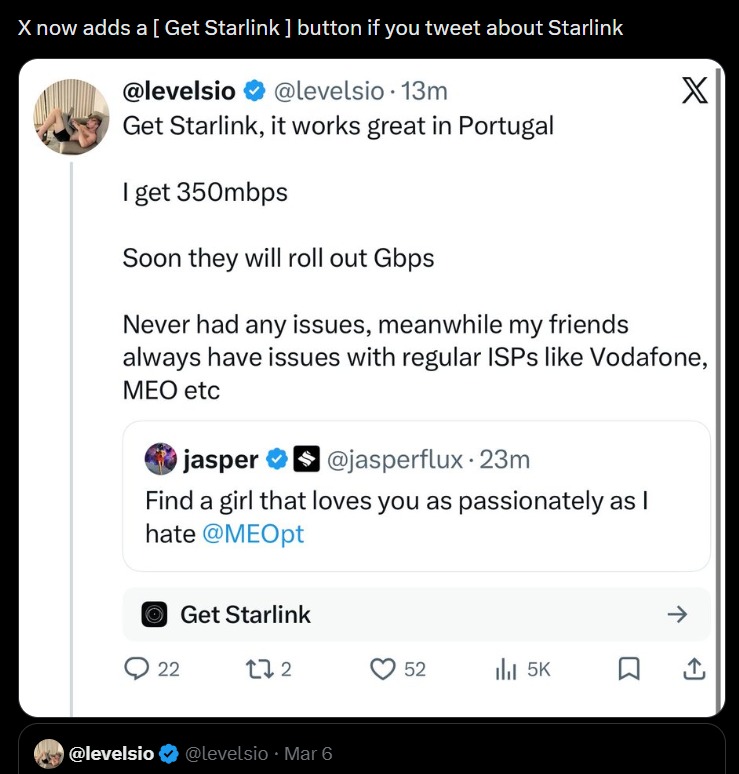
The feature first gained attention after tech entrepreneur levelsio shared screenshots of a “Get Starlink” button appearing beneath a post discussing the satellite internet service, suggesting that X had begun testing contextual commerce features within organic posts. The discovery quickly spread across the platform and sparked discussions about whether X was experimenting with a new commerce-driven advertising system.
Shortly afterward, X’s product leadership acknowledged the experiment.
The Strategy Behind Contextual Product Mentions
According to X’s product leadership, the company is exploring a new generation of contextual advertising. X Head of Product Nikita Bier explained the concept in a public post discussing the experiment, saying the goal is to build what he described as “an ad product that doesn’t feel like an ad.”
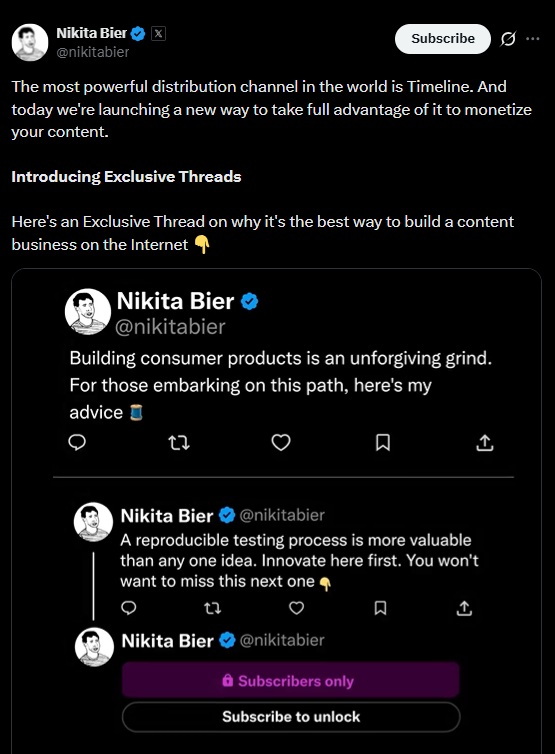
Instead of relying on traditional sponsored posts or banner ads, the approach focuses on embedding product links naturally within conversations. This allows advertising to appear as a helpful extension of the discussion rather than an intrusive interruption.
Instead of inserting advertisements directly into the feed, the platform analyzes posts that already mention brands or products. If the mention appears positive or neutral, the system may insert a subtle call-to-action link connected to that product.
This turns an organic conversation into a potential commerce opportunity without disrupting the natural flow of the platform.
The strategy mirrors broader trends in digital marketing. Today, advertisers increasingly prefer native advertising formats that blend naturally with content rather than interrupt it.
Impact on the Creator Economy and Affiliate Marketing
Despite its innovative design, the new ad format has already sparked debate among creators and influencers.
One of the main points of controversy is revenue sharing.
Currently, X has stated that users will not receive a percentage of the revenue generated from these contextual product links.
The company argues that sharing revenue could encourage creators to artificially promote products simply to trigger monetization opportunities, which could undermine the authenticity of organic conversations.
However, many creators disagree with this approach.
Influencers argue that if their posts are being used to generate commercial engagement, they should receive some form of compensation. Critics say the system effectively allows the platform to monetize user speech without sharing the benefits with the speaker.
If the experiment expands globally, the debate around creator compensation and affiliate marketing is likely to intensify.
Bridging the Gap Between Reading and Listening: Grok-Powered Audio
In addition to privacy and advertising updates, X is also making significant changes to how content is consumed on the platform.
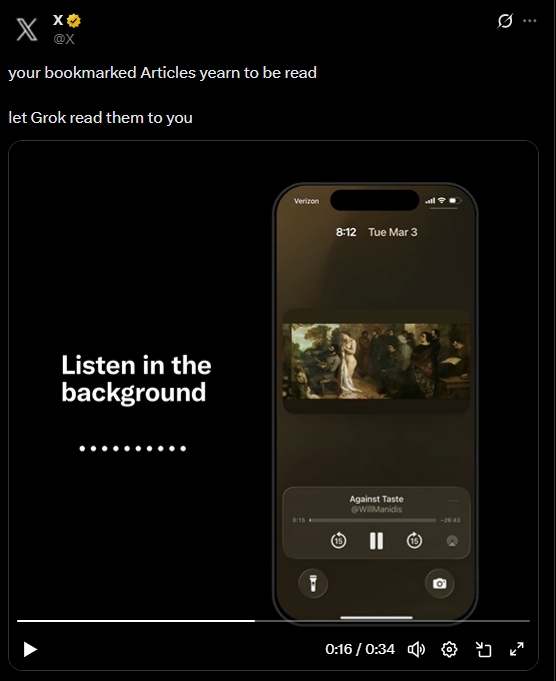
As long-form articles become more common on X, the company has introduced a Grok-powered audio narration feature that allows users to listen to articles instead of reading them.
The feature adds a “Listen” button to long-form posts and articles.
When activated, Grok automatically converts the article into a spoken audio narration that users can play directly within the app.
The feature was highlighted in an official announcement shared by the X platform itself, signaling the company’s commitment to improving accessibility and expanding how long-form content can be consumed.
The Technology Behind the “Listen” Feature
Unlike traditional text-to-speech systems that often sound robotic, the Grok audio feature uses an advanced AI voice engine developed by xAI.
The system analyzes sentence structure, punctuation, and tone to produce a reading experience that sounds far more natural than earlier AI narration tools.
The voice adjusts pacing, rhythm, and emphasis in ways that mimic human speech patterns.
Users can also control the listening experience through:
- Playback speed adjustments
- Background listening mode
- Pause and resume controls
These features make the audio option comparable to podcasts or audiobook players, allowing users to consume long-form content while multitasking.
Enhancing Accessibility and Content Engagement
The addition of audio narration also improves accessibility across the platform.
For users with visual impairments or reading difficulties, the ability to listen to articles provides an alternative way to engage with written content.
At the same time, it aligns with broader trends in digital media consumption.
Modern internet users increasingly prefer audio-based information formats, especially when commuting, exercising, or performing other activities that make reading inconvenient.
By adding audio playback, X is expanding its role from a text-based platform into a multimedia publishing environment.
The Bigger Picture: X’s Transformation into a Content Powerhouse
Taken together, these updates reveal a unified strategy.
X is attempting to solve three fundamental challenges simultaneously:
- Trust in AI tools
- Revenue generation for the platform
- Retention of creators producing long-form content
The privacy toggle addresses concerns around AI misuse and content ownership.
The contextual ad system introduces a new monetization model that feels less intrusive than traditional advertising.
The audio feature increases engagement with longer articles and encourages deeper content creation.
When viewed collectively, these updates suggest that X is evolving into a fully integrated AI media platform.
Final Thoughts on the March 2026 Updates
For readers of GetInDevice News, these updates offer a glimpse into the next phase of social media evolution.
Platforms are no longer simply hosting posts and replies.
They are becoming AI-enhanced ecosystems where content, technology, and commerce merge together.
X’s latest updates demonstrate how artificial intelligence can reshape nearly every aspect of the social media experience — from privacy controls and advertising to how people consume information.
Whether the platform can successfully balance innovation, regulation, and user trust remains to be seen.
But one thing is clear.
The transformation of X into an AI-powered digital ecosystem is only just beginning. make it motre better
