
We’ve all stood at the edge of that digital cliff: the blinking cursor, the stark white screen, and the mounting pressure to say something “meaningful.” In a world where everyone is a publisher, the barrier to entry isn’t technical anymore—it’s creative. Content burnout isn’t a lack of effort; it’s a lack of a reliable system. When you’re trying to scale a brand or a personal profile, “waiting for inspiration” is a luxury you simply cannot afford. Professional creators don’t wait for the lightning bolt; they build lightning rods.
This is where content idea generators and strategic social tools come into play. They aren’t meant to replace your brain; they are meant to act as a “creative co-pilot.” They sift through the noise of millions of data points, viral trends, and search intents to hand you a map. Your job is to drive the car. By using these tools effectively, you transition from a reactive “what do I post today?” mindset to a proactive, data-backed content strategy.
The Science of “Shareability” and Why Ideas Fail
Before we dive into the toolkit, we have to look at why most content dies in obscurity. It usually isn’t because the writing is bad—it’s because the idea didn’t align with human psychology. A high-performing idea usually ticks one of three boxes: it solves a painful problem (Utility), it validates a deeply held belief (Identity), or it challenges a common misconception (Novelty).
If your idea generator is giving you generic “Top 5 Tips for Marketing” titles, you’re already behind. You need tools that help you find the “Curiosity Gap”—that space between what a user knows and what they want to know. The tools listed below are the best in the business at finding that gap and helping you fill it.
BuzzSumo: The Data-Driven Sentinel of Content Discovery
When you need to stop guessing and start knowing, BuzzSumo is the gold standard of content research. It doesn’t just suggest ideas — it validates demand. By analyzing billions of articles across social media and the web, BuzzSumo shows you exactly what content is earning engagement, backlinks, and sustained attention.

Instead of asking, “What should I write?” you start asking, “What is already proven to work — and how can I improve it?”
That shift alone changes everything.
Deciphering the “Viral DNA”
BuzzSumo allows you to reverse-engineer success. If a competitor publishes a high-performing article, you can analyze:
- Total engagement across platforms
- Backlink sources and authority
- Publishing date trends
- Content length and structure
- Evergreen performance over time
This helps you understand whether a topic was a short-term spike — or a long-term opportunity.
Core Features for Strategic Ideation
Content Analyzer
Enter any keyword and filter results by engagement, date range, or Evergreen Score. This allows you to separate trend-based hype from sustainable search opportunities.
Question Discovery
BuzzSumo pulls real questions from forums like Reddit and Quora. These are not random suggestions — they are direct insights into audience pain points. Answering these questions positions your content as helpful, not just visible.
Backlink & Competitor Analysis
You can see which domains link to high-performing content and what type of format attracts links. This is especially powerful for SEO-driven creators looking to build authority.
Strategic Implementation for Professionals
Most beginners chase the “most shared” article.
Professionals look for the Engagement-to-Content Gap:
- Strong engagement
- Solid backlink profile
- Limited in-depth coverage
If a topic has thousands of shares but only a few comprehensive guides, that’s not competition — that’s opportunity.
Instead of copying viral content, create the most complete, updated, and actionable version available. That’s how you win long-term.
Copy.ai: The AI Brainstorming Partner for High-Volume Creation
If BuzzSumo is the “research department,” Copy.ai is your “creative director.” In today’s content landscape, volume is leverage. You often need to test multiple angles before finding the one that truly resonates. Copy.ai uses advanced AI models to take a simple seed idea and expand it into dozens of structured possibilities.

Instead of staring at a blank page, you start with momentum.
Breaking the Creative Logjam
The Content Idea Generator inside Copy.ai is built specifically to eliminate blank-page paralysis. You provide a short description of your niche, audience, or product — and it generates blog topics, social media hooks, email subject lines, and content angles in seconds.
This isn’t just speed. It’s creative expansion.
You move from:
- One idea
To: - Multiple hooks
- Different tones
- Diverse formats
All within minutes.
Contextual Ideation
Unlike basic generators, Copy.ai understands audience nuance.
If you specify that your audience is:
- Overwhelmed startup founders
- Freelance designers
- SaaS marketers
- College interns
The tone, framing, and suggested angles shift accordingly.This allows you to align your content ideas with audience psychology — not just keywords.
The “Angle” Strategy
Copy.ai doesn’t just produce titles. It suggests perspectives.
For a single topic, it might generate:
- A controversial opinion
- A myth-busting breakdown
- A tactical how-to guide
- A storytelling-based post
- A behind-the-scenes narrative
This instantly diversifies your content mix and prevents repetition.
Making AI Sound Human
The key to using Copy.ai professionally is the Refinement Loop.
Never publish the first output.
Instead:
- Generate 15–20 ideas
- Shortlist the strongest two
- Ask the AI to expand or deepen those specific angles
- Inject your personal experience and perspective
AI gives you structure.
You add originality.
That combination turns automated output into authentic, high-performing content.
Hypefury: The Social Media Growth Engine for Digital Architects
Hypefury isn’t just a scheduling tool — it’s a strategic distribution engine built for creators who understand that ideas alone don’t grow accounts. Distribution does. Designed primarily for X (Twitter) and LinkedIn, Hypefury revolves around one core principle: the hook determines everything.
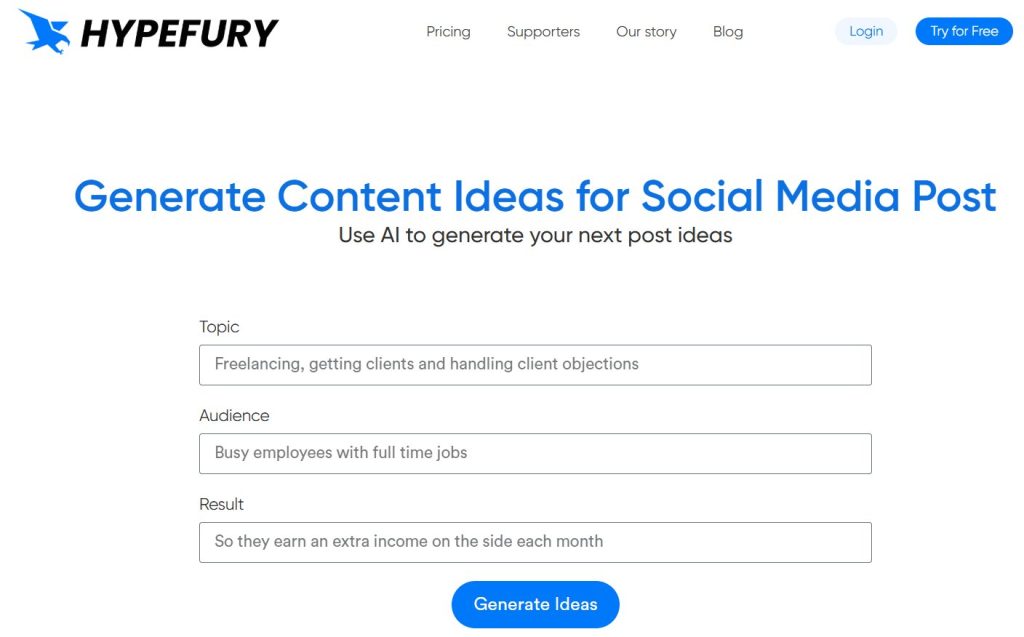
In today’s feed-driven platforms, you have barely 1–2 seconds to earn attention. If the first line fails, the idea never gets seen. Hypefury is built around studying and applying proven hook structures so you stop guessing what might work and start engineering engagement intentionally.
Mastering the Art of the Hook
Hypefury’s Content Ideas feature is based on viral frameworks already validated by high-performing creators. Instead of inventing structure from scratch, you learn what patterns repeatedly generate replies, saves, and shares.
This includes:
- Curiosity-based openings
- Contrarian statements
- Clear promise-driven hooks
- Tension-building first lines
You’re not copying content — you’re understanding why certain formats win attention.
The Ghostwriter Library
The Ghostwriter feature gives access to thousands of curated, high-performing posts across categories like productivity, marketing, finance, and entrepreneurship.
What makes this powerful isn’t the content itself — it’s the structure behind it.
You can study:
- How strong openings are written
- How tension escalates
- Where curiosity is introduced
- How calls-to-action are positioned
Then apply those structural insights to your own original ideas. That’s strategic modeling, not imitation.
Auto-Plug and Recurrence: Turning Posts into Assets
One of the biggest mistakes creators make is letting great content disappear after 24 hours.
Hypefury solves this with automated recycling and smart recurrence. It identifies your top-performing posts and resurfaces them to new followers over time. This transforms single posts into long-term growth assets.Instead of constantly producing from zero, you build a compounding distribution loop.
The Strategic Pivot: Threads and Carousels
Modern platforms reward dwell time and depth.
Hypefury helps you turn one core idea into:
- Structured threads
- Multi-part breakdowns
- Sequential storytelling posts
By breaking complex ideas into short, connected segments, you increase the likelihood of saves, shares, and profile visits.
The result isn’t just more content — it’s more strategic distribution.
Yarnit: Where SEO Strategy Meets Narrative Intelligence
Yarnit is built for creators and marketers who don’t just want to publish — they want to rank and resonate. It’s an AI-powered content platform that integrates SEO data directly into the ideation and storytelling process, ensuring your ideas work both on Google and on social platforms.

Instead of separating creativity and search strategy, Yarnit combines them from the start.
Building Content Clusters (Not Random Posts)
Most creators produce isolated pieces of content.Yarnit encourages cluster thinking.If your core topic is “Remote Work,” it helps you identify connected subtopics such as:
- Productivity systems
- Async communication
- Burnout prevention
- Remote leadership
- Collaboration tools
This structured approach builds topical authority — which is critical for long-term SEO growth. Instead of writing one article, you build a network of content that strengthens each other.
That’s how authority compounds.
Data-Backed Storytelling
One of Yarnit’s strengths is blending narrative with data.
It pulls relevant statistics, trends, and contextual insights into your content planning process. This ensures your ideas aren’t just opinion-based — they’re supported by research and real-world signals.
Adding data:
- Improves credibility
- Increases shareability
- Strengthens search performance
In competitive niches, authority isn’t optional — it’s required.
Visual–Text Harmony
Yarnit also considers format and presentation. It suggests content structures and visual styles that align with your topic and audience.
This helps maintain brand consistency across:
- Blog posts
- Social media
- Carousels
- Campaign content
Instead of treating visuals as an afterthought, you integrate them into strategy.
The SEO Edge for Creators
Most creators think about SEO after writing the article.Yarnit reverses that process.
Before you commit to a topic, you can analyze:
- Search volume
- Keyword difficulty
- Topic competitiveness
This allows you to pivot toward “winnable” opportunities — topics with meaningful demand but manageable competition.
The result?
Content that doesn’t just perform for a week — it builds long-term search equity.
FatJoe Blog Title Generator: Engineering the Psychology of the Click
FatJoe’s Blog Title Generator is deceptively simple — but strategically powerful. It focuses on one of the most overlooked elements of content performance: the headline.

Even exceptional content fails if the title doesn’t earn the click.
FatJoe applies proven copywriting formulas to transform generic topics into compelling, curiosity-driven headlines that increase visibility and engagement.
The Curiosity Gap Formula
At its core, the tool leverages principles from Information Gap Theory — the idea that humans are psychologically driven to close gaps between what they know and what they want to know.
Instead of writing:
“Tips for Content Marketing”
You get variations like:
- “Why Most Content Marketing Strategies Fail (And How to Fix Yours)”
- “7 Content Marketing Mistakes Killing Your Growth”
- “The Content Strategy Secret Nobody Talks About”
The tool systematically introduces tension, promise, or intrigue — all of which increase click probability.
Instant Variation and Format Diversity
Enter your primary keyword, and FatJoe generates multiple headline types, including:
- List-based titles
- Question-driven headlines
- Problem-solution framing
- Controversial or contrarian takes
- “Secret” and insider-style hooks
This variety prevents creative tunnel vision and forces you to evaluate multiple positioning angles before choosing one.
Professional Headline Testing
Serious marketers rarely settle on the first title.
A common workflow looks like this:
- Generate 10–15 headline options
- Shortlist the strongest three
- Test them as email subject lines or social hooks
- Choose the highest-performing variation
This transforms headline writing from intuition into experimentation.
Why Headlines Are Your Most Important Asset
In SEO, Click-Through Rate (CTR) is a behavioral signal. If users repeatedly see your link in search results but don’t click, rankings can weaken over time.
Your headline is your storefront.
It determines:
- Whether someone clicks
- Whether they scroll past
- Whether your content even gets a chance
FatJoe ensures your packaging is as strategic as the content inside.
ContentIdeas.io: The Niche-Sensing Discovery Engine
If you want to understand what’s happening at the edges of your industry — the conversations forming before they go mainstream — ContentIdeas.io is built for that.
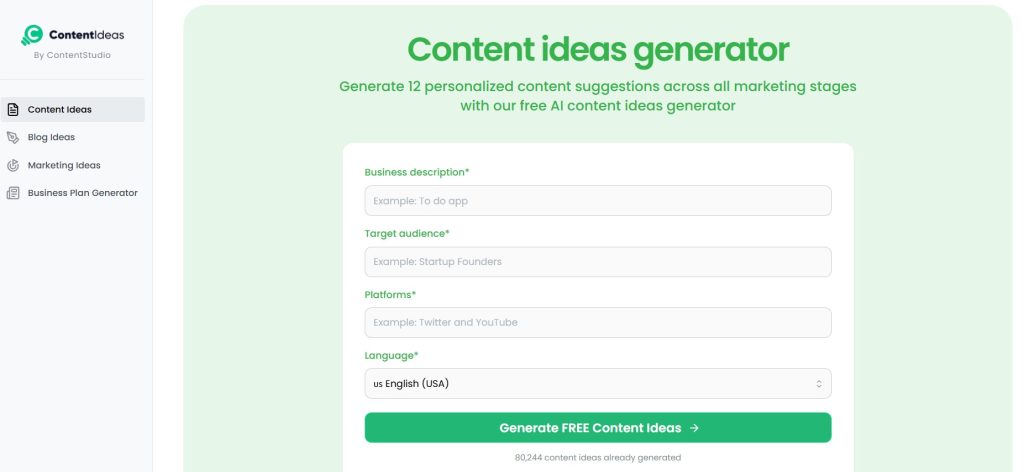
Unlike traditional AI generators that create ideas from scratch, ContentIdeas.io focuses on discovery and curation. It scans discussions across Reddit, niche blogs, news sites, and online communities to surface what people are actively talking about.
This is less about “inventing” ideas — and more about identifying demand early.
Finding the Signal in the Noise
The internet produces endless content every day. Most of it is noise.ContentIdeas.io helps isolate the signal.It organizes topics into niche-specific categories and subcategories, making it easier to spot patterns and rising conversations. Instead of guessing trends, you monitor them in real time.
This gives you strategic timing — which is often more important than originality.
Trend Tracking and Early Positioning
One of its strongest advantages is identifying rising topics before they peak.
Being early matters because:
- Competition is lower
- Engagement is higher
- Authority builds faster
If you publish a definitive guide before a trend becomes saturated, you position yourself as a thought leader — not a follower.
Cross-Platform Inspiration
ContentIdeas.io aggregates discussions from multiple platforms, showing how the same topic is being framed differently across the web.
For example, a trending news topic might appear as:
- A debate thread on Reddit
- A tactical breakdown on LinkedIn
- A short-form reaction video on TikTok
This allows you to repurpose intelligently — adapting one core idea into platform-specific formats without losing relevance.
Using Curation to Build Authority
In competitive niches, authority isn’t just about creating new ideas — it’s about contextualizing existing ones.When you consistently identify relevant trends and add your own perspective, you become a “filter” for your audience. Over time, this builds credibility and trust.
Search engines increasingly reward content that demonstrates Expertise, Authoritativeness, and Trustworthiness (E-E-A-T). Monitoring real conversations and responding with insight strengthens all three.
ContentIdeas.io doesn’t just help you generate ideas — it helps you stay contextually relevant.
| Tool | Best For | Unique Advantage |
|---|---|---|
| BuzzSumo | Market Research | Viral Data & Competitor Analysis |
| Copy.ai | Idea Expansion | Multi-Angle AI Brainstorming |
| Hypefury | Social Growth | Hook Templates & Recycling |
| Yarnit | SEO Authority | Content Clustering |
| FatJoe | CTR Optimization | Psychological Headlines |
| ContentIdeas.io | Trend Discovery | Real-Time Niche Signals |
The “Second Brain” Strategy: Managing Your Ideas
Having a generator is only half the battle. If you don’t have a place to store and nurture these ideas, they will evaporate. Professional creators use a “Content Library” or a “Second Brain” to manage their pipeline.
The Three-Stage Content Pipeline
- Stage 1: The Inbox (Raw Ideas): This is where every idea from Copy.ai or FatJoe goes. Don’t judge them yet. Just capture them.
- Stage 2: The Nursery (Incubation): This is where you add research from BuzzSumo or stats from Yarnit. You start to see which ideas have “legs” and which are just filler.
- Stage 3: The Production Line (Execution): This is where an idea becomes a draft. You apply your brand voice, add your personal stories, and prepare it for distribution.
Why Curation is the New Creation
In 2026 and beyond, the most valuable creators aren’t necessarily the ones with the most original ideas—they are the ones who can synthesize the best ideas from around the web. Use these tools to find the “Raw Material,” and then use your “Human” perspective to weave them into something new.
SEO Strategy: Linking Your Ideas to Intent
When you’re using these generators, you must always filter the results through the lens of “User Intent.” If you generate an idea that is “Top 10 Marketing Trends,” but the person searching for that keyword actually wants “How to set up a Facebook Ad,” you have a “Mismatched Intent.”
Aligning with the Marketing Funnel
- Top of Funnel (TOFU): Broad, educational ideas that build awareness. (Use ContentIdeas.io and BuzzSumo)
- Middle of Funnel (MOFU): Specific, problem-solving ideas that build trust. (Use Yarnit and Copy.ai)
- Bottom of Funnel (BOFU): Direct, conversion-focused ideas that drive sales. (Use FatJoe for high-impact headlines)
Final Thoughts: The Human Element in an Automated World
At the end of the day, these tools are just multipliers. If you put a “0” in (no unique perspective, no personal experience, no empathy), the output will always be “0.” But if you bring your “Human” self—your wit, your failures, your hard-won lessons—and run them through these strategic engines, you become unstoppable.
The goal isn’t just to “post content.” It’s to build a relationship with an audience that trusts you. Use BuzzSumo to see what they care about, Copy.ai to find the right words, Hypefury to master the delivery, and Yarnit to ensure you’re found. But most importantly, stay human. That’s the only thing an algorithm can’t replicate.
