
The way content is created has changed dramatically. AI tools are now part of almost every writer’s workflow, helping generate articles, product descriptions, and even full-scale websites in minutes. But as powerful as these tools are, they come with a noticeable flaw-AI-generated text often feels… off. so because of this the AI Content Humanizer tools have become popular.
It’s not always obvious at first glance. The grammar is correct. The structure is clean. But something about the tone feels predictable, slightly robotic, and lacking personality. Readers can sense it, and increasingly, so can search engines.
This is exactly where AI content humanizers come in.
These tools are not just simple rewriters. They are designed to reshape AI-generated text into something that feels natural, engaging, and genuinely human-without losing the original meaning. As content standards continue to rise in 2026, humanization is no longer optional. It has become a core part of publishing high-quality content.
Why AI Content Still Feels Artificial
To understand the importance of humanizers, it helps to look at how AI actually generates text.
Large language models don’t “think” or “write” the way humans do. Instead, they predict the next most likely word in a sequence based on patterns they’ve learned. This makes them incredibly efficient-but also highly predictable.
The result is content that is technically perfect but stylistically repetitive. Sentences tend to follow similar structures. Word choices are safe and common. Paragraphs flow smoothly, but often without variation or personality.
Human writing, on the other hand, is naturally inconsistent-in a good way. It includes unexpected phrasing, varied sentence lengths, and subtle emotional cues. That contrast is what makes AI text stand out as artificial.
What Humanizers Actually Fix
AI content humanizers work by breaking the patterns that make text feel robotic.
They introduce variation in sentence structure, adjust tone to feel more conversational or authoritative, and improve transitions so the content flows like a natural train of thought rather than a generated output. More advanced tools even understand context, ensuring that the rewritten content still fits the niche and maintains accuracy.
The goal is not just to “pass AI detection,” but to make the content enjoyable to read. That’s a key difference many people overlook.
Why Humanized Content Performs Better in SEO
Search engines have evolved far beyond keyword matching. Google’s focus today is on helpful, people-first content. That means content that keeps users engaged, answers their questions clearly, and provides real value.
Raw AI content often struggles here. It may answer the question, but it doesn’t hold attention. It lacks depth, personality, and unique insight.
When content is properly humanized, it becomes easier to read, more engaging, and more trustworthy. Readers stay longer, interact more, and are more likely to explore further. These behavioral signals play a significant role in how content ranks.
So while Google may not penalize AI content directly, poorly written AI content simply doesn’t perform.
The Best AI Content Humanizers to Use
With dozens of tools entering the market, only a few actually deliver meaningful improvements. The best humanizers don’t just replace words-they restructure and refine content intelligently.
1.Humanizeai.co: Academic and Professional Standard
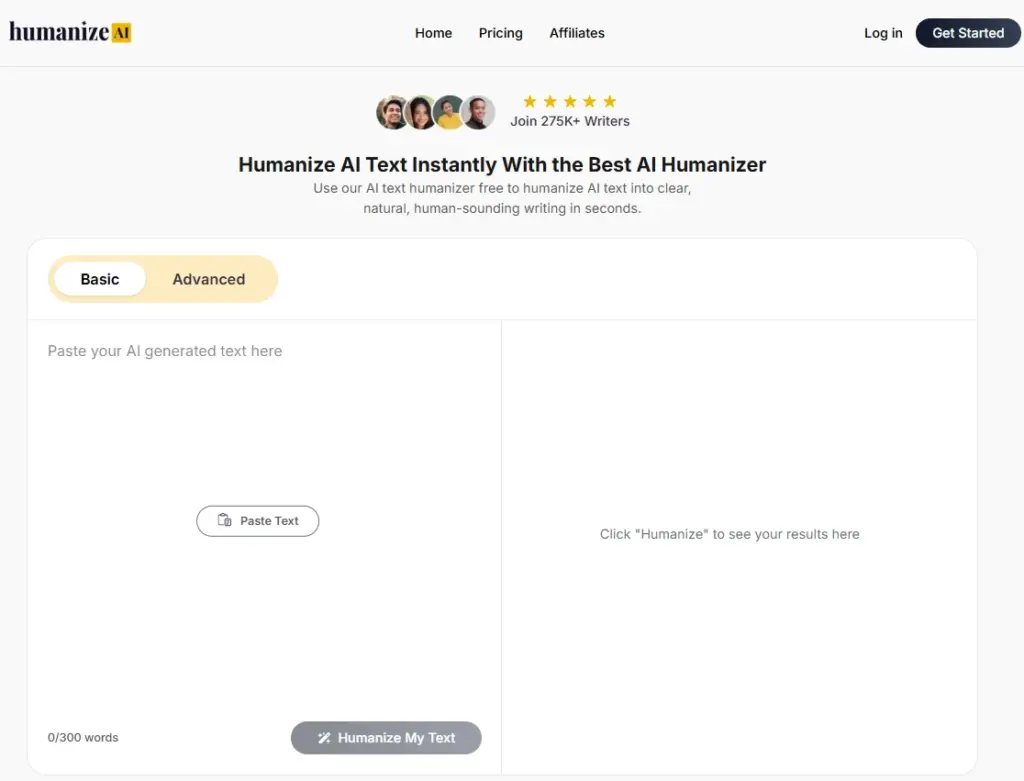
While the name suggests a focus on students, Humanizeai.co (powered by GPTinf) is one of the best for high-level professional guides
Restructuring Algorithm vs. LLM Rewriting
Unlike other tools that use one AI to rewrite another, this platform uses a custom algorithm to restructure text. This prevents “loop-back” errors and ensures your original ideas stay completely intact while clarity and readability improve.
The “Freeze” Keyword Feature
For tech news, specific terms (like “GetInDevice” or “Meta AI”) must not be changed. Humanizeai allows you to “Freeze” keywords, ensuring the humanization process ignores specific industry jargon or brand names, maintaining the factual precision of your article.
2. MyDetector.ai: The Dual-Action Solution
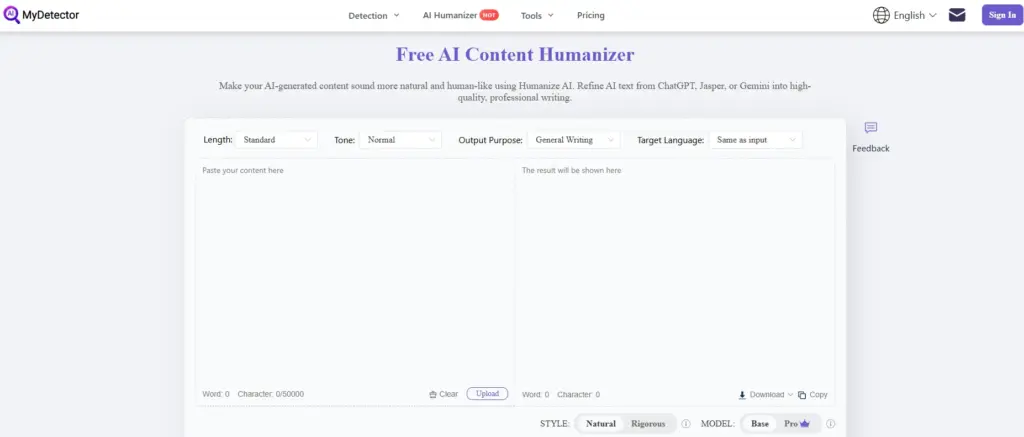
MyDetector.ai offers a unique value proposition by combining a high-sensitivity AI detector with a dedicated humanizer, creating a “closed-loop” system where you can check and fix content within the same interface.
Integrated Feedback Loop for Editors
Instead of using one tool to detect and another to rewrite, MyDetector integrates both. When you paste a draft, the tool highlights specific sentences flagged as AI-generated with high probability. This allows an editor to target only the problematic sections rather than rewriting an entire 2,500-word article unnecessarily.
Multi-Format Support and Versatility
Unlike many web-only tools, MyDetector supports direct uploads of PDF, Word (.docx), and PowerPoint files. This is invaluable for professionals handling whitepapers. Beyond text, the platform has even branched into AI image detection, analyzing pixel structures and GAN noise signatures to produce a confidence score, making it a comprehensive authenticity hub.
Targeted Humanization Accuracy
The humanizer within MyDetector focuses on specific linguistic triggers. For SEO specialists, this tool provides a layer of security, ensuring that every published piece passes the most search-engine scrutiny before it goes live.
3. AIHumanize.io: Sophisticated Linguistic Refinement
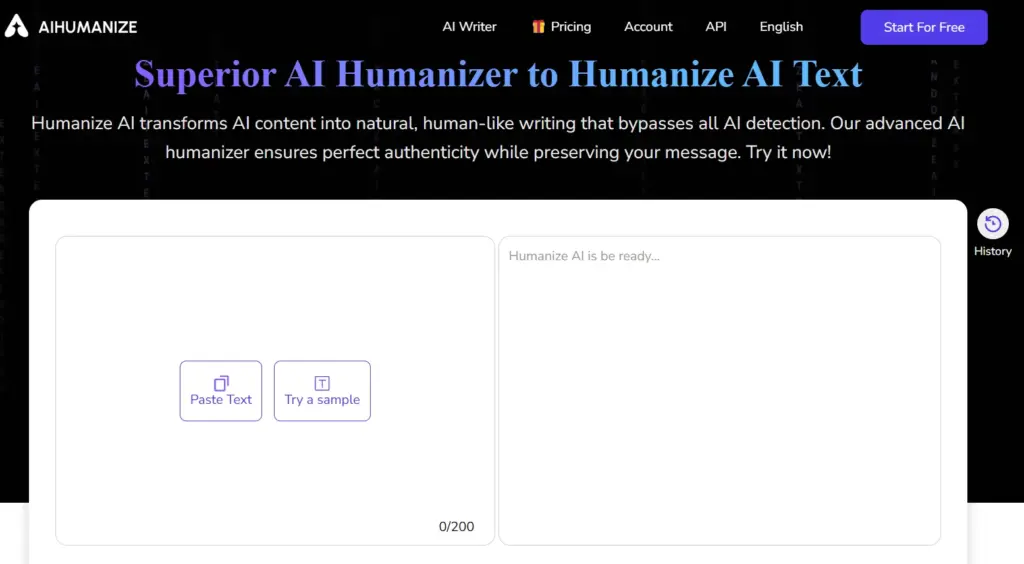
AIHumanize.io is built for those who prioritize readability above all else. Many humanizers “pass” detection by making the grammar so convoluted it confuses both the detector and the reader. AIHumanize avoids this trap entirely.
Context-Aware Proprietary Models
This tool uses a proprietary model that understands the context of the niche you are writing in. Whether it’s a technical guide about Android APKs or a lifestyle piece about social media trends, it maintains the appropriate vocabulary. It excels at “naturalizing” transitions between paragraphs, making the entire article feel like a cohesive thought.
Global Reach and Language Support
For international platforms, AIHumanize is a powerhouse, supporting over 30 languages. It specifically targets “transition fatigue”-the repetitive use of words like “Furthermore” and “Moreover”-replacing them with varied connectors that a native speaker would naturally use.
4. SuperHumanizer.ai: Efficiency at Scale
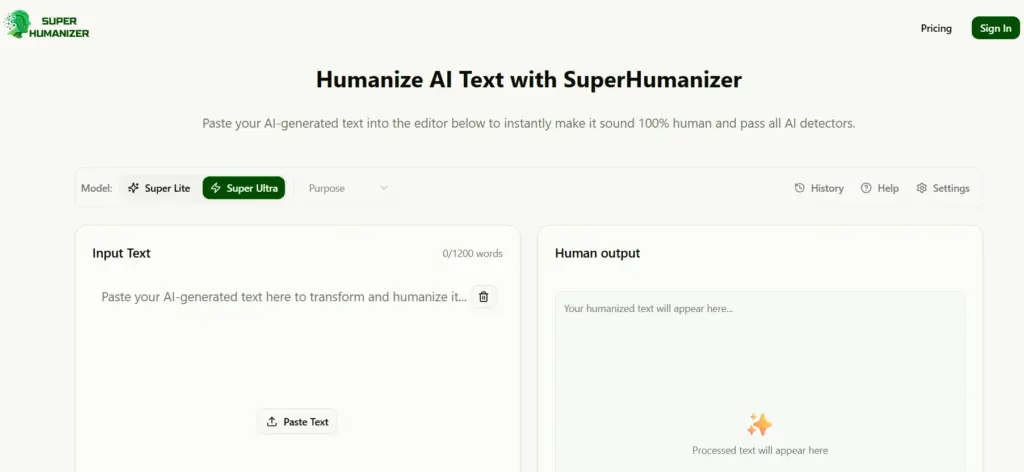
For editors handling massive volumes of content, SuperHumanizer.ai is a powerhouse. It is designed for speed without sacrificing the “soul” of the writing.
Bulk Processing and Workflow Optimization
SuperHumanizer allows for bulk uploads, making it ideal for refreshing old archives of AI-assisted content. The engine focuses on “burstiness”-varying sentence length dramatically to ensure the text feels energetic. It is particularly adept at taking dry, factual lists and turning them into narrative-driven sections.
Custom Strength and Tone Levels
It offers three intensity levels: Light, Medium, and Strong. This allows for granular control. If you have a technical document that only needs a slight “softening,” the Light mode works wonders. For creative blog posts that feel too stiff, the Strong mode reorders paragraphs and injects stylistic flourishes common in professional journalism.
5. LLMRefs.com: The Research-Oriented Humanizer
LLMRefs.com takes a slightly more academic and data-driven approach to humanization. This tool is part of a broader suite of LLM utilities refined by a massive database of linguistic variations.

Maintaining Accuracy in Technical Writing
One of the biggest risks with humanizing tools is the loss of factual accuracy. LLMRefs is engineered to protect data points, statistics, and specific technical terms. For GetInDevice, where version numbers and technical specs are crucial, this tool ensures the “human touch” doesn’t come at the expense of technical truth.
AI SEO and Content Cleaning
Unique to LLMRefs is its focus on Generative Engine Optimization (GEO). The humanizer specifically removes “smart quotes,” weird spaces, and fancy dashes that can sometimes confuse AI crawlers. It’s designed to increase your brand’s visibility in AI search results like ChatGPT Search and Google’s AI Overviews.
6. WriteHybrid.com: The Best of Both Worlds
WriteHybrid.com positions itself as a bridge between AI efficiency and human creativity. Its algorithm is modeled after the writing styles of top-tier columnists and editors.
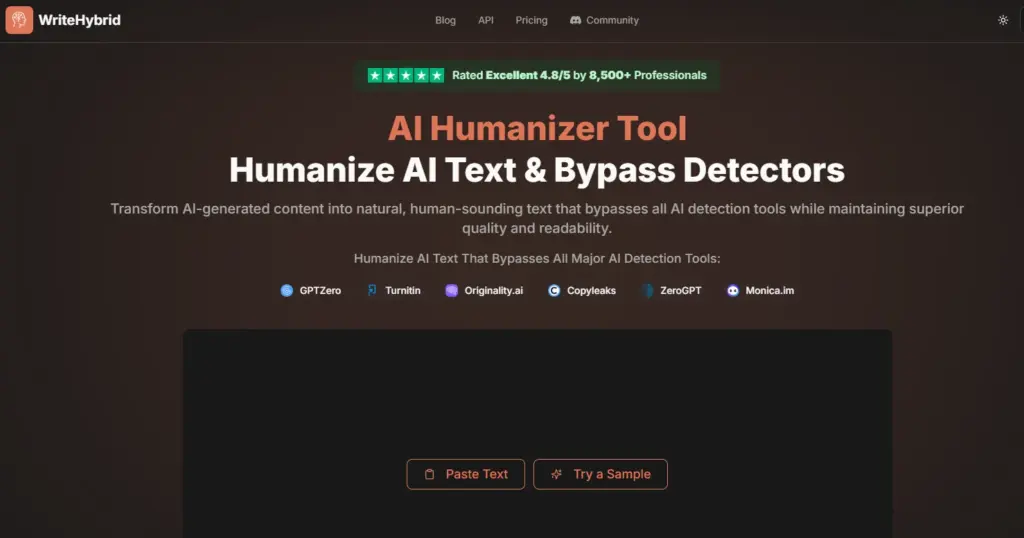
The “Hybrid” Creative Philosophy
Instead of just masking the AI, WriteHybrid “collaborates” with the text. It analyzes the core message and looks for ways to express it with more personality, often suggesting rhetorical questions or anecdotal-style phrases that build a connection with the reader.
Academic Integrity and Citation Preservation
A standout feature is its Academic Tone Preservation. Unlike other tools that might scramble a bibliography, WriteHybrid is specifically trained to preserve all citations, references, and footnotes (APA, MLA, etc.) while humanizing the main body of the text. This makes it a go-to for high-level research papers and authoritative guides.
7. GPTHuman.ai: Simple, Effective, and Accessible
GPTHuman.ai is a straightforward tool that does one thing exceptionally well: it breaks the predictable patterns of GPT models on a budget.
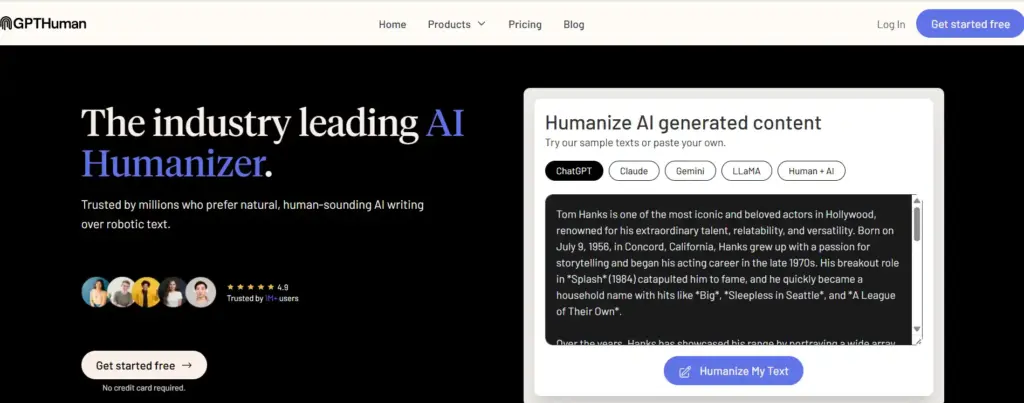
Shield Guard Technology
The platform features a proprietary “Shield Guard” protection layer designed to bypass the most aggressive AI detectors. It also includes a unique ChatGPT Watermark Removal feature, which targets the hidden statistical patterns that modern LLMs use to “brand” their output.
Massive Language Support
Supporting over 50 languages, GPTHuman is incredibly versatile for global marketing teams. It offers a “trial” level of access with 300 words per output, allowing users to see the quality before committing to the unlimited plans that offer 2,000 words per single run.
8. DeCopy.ai: Protecting Originality and Flow
DeCopy.ai focuses on the intersection of humanization and plagiarism prevention. In an era where AI can sometimes repeat itself, DeCopy ensures your content is unique and feels fresh.
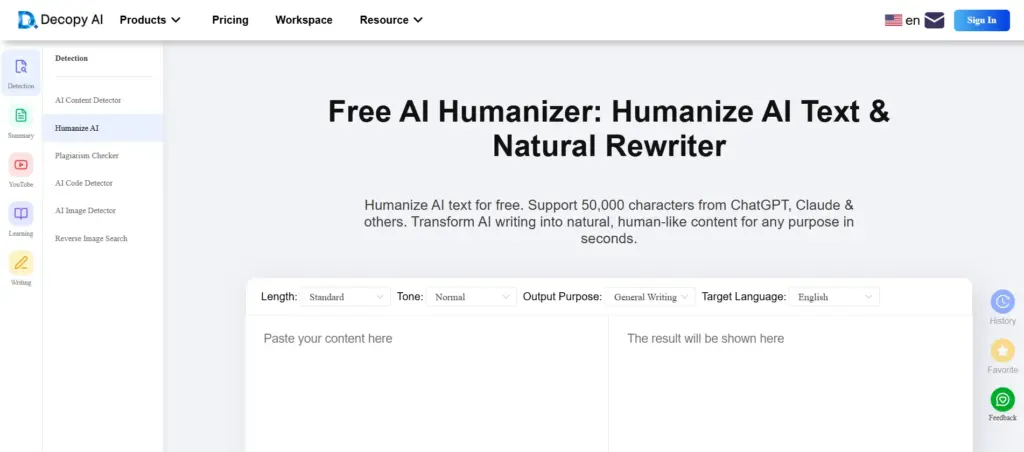
Syntactic Restructuring vs. Synonym Games
DeCopy utilizes Syntactic Restructuring. It doesn’t play low-level synonym games; instead, it breaks the rigid narrative rhythm of AI and injects the “irregularity” characteristic of human writing. This is why it often maintains “all-green” status on hyper-sensitive detectors like Originality.ai.
Eliminating “Black Box” Anxiety
The tool offers a clear logic: input on the left, see the AI probability score on the right. If it’s too high, you can humanize on the spot until the score improves. This transparency helps editors feel confident that their content is safe for publication.
9. GetVoila.ai: The Productivity Suite Integration
Voila is more than just a humanizer; it is a full productivity assistant that lives in your browser as a powerful extension.
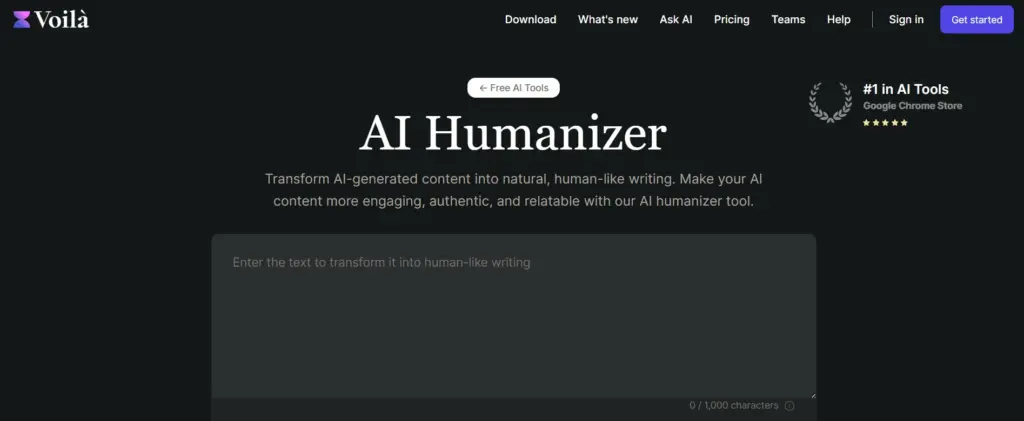
On-the-Fly CMS Refinement
The benefit of Voila is that you can humanize content as you are drafting it directly in your CMS (like WordPress) or Google Docs. You can highlight a paragraph that feels a bit “stiff” and ask the tool to humanize it instantly. This real-time interaction is a favorite for hands-on editors.
Contextual Web Research
Voila can read any webpage or URL, helping you summarize information or transcribe YouTube videos before humanizing the summary. It’s a multi-tool for creators who need to process vast amounts of data and turn it into polished, human-centric content quickly.
10. GPTHumanizer AI: Free and No-Sign-Up Humanization
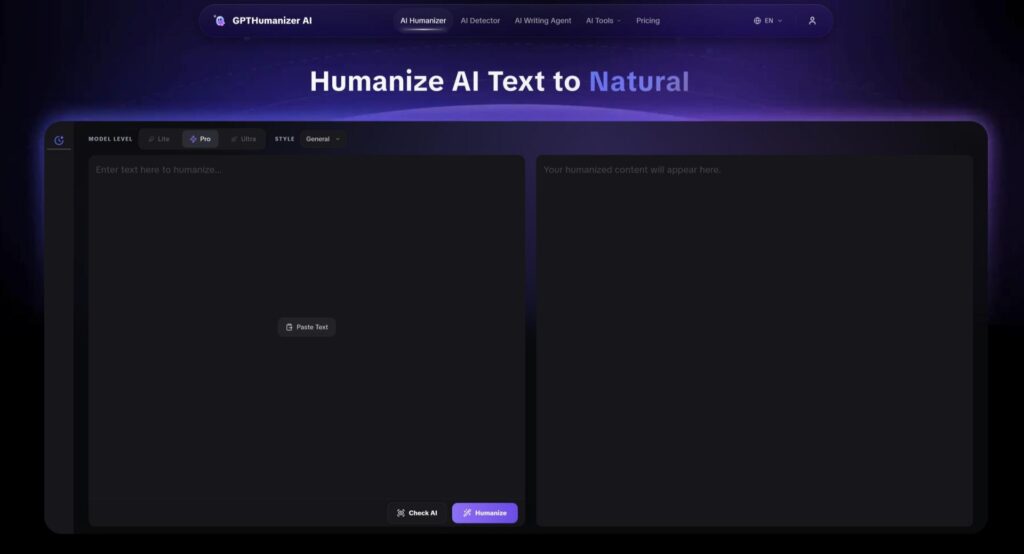
GPTHumanizer AI is built for writers, bloggers, students, and marketers who need a quick way to make AI-generated drafts sound more natural. It is especially useful when the original text has the right meaning but still feels repetitive, overly polished, or too close to a standard AI response.
Unlimited Lite Access Without Sign-Up
As an AI content humanizer, GPTHumanizer AI offers a free Lite workflow with unlimited use and no sign-up required. This makes it practical for quick blog edits, social captions, emails, product descriptions, and everyday draft cleanup before the final human review.
Style Control and Meaning Preservation
GPTHumanizer AI focuses on improving sentence rhythm, flow, and readability while keeping the original message clear. With 8 writing styles and support for 11 languages, it gives users more control over whether the rewritten text should sound natural, academic, casual, professional, or more suitable for another writing context.
The Human Touch Still Matters
Even the best tools are not a complete replacement for human input.
One of the most common mistakes is relying entirely on automation. While humanizers improve structure and tone, they cannot add genuine experience or perspective. That’s something only a human editor can provide.
A quick final review can make a huge difference. Checking for tone consistency ensures the article feels cohesive from start to finish. Verifying facts prevents subtle errors introduced during rewriting. And adding even a small personal insight can transform the content from generic to memorable.
This final layer is what truly separates average content from high-quality content.
The Future of Content: AI + Human Collaboration
As AI continues to evolve, the role of the writer is also changing. Instead of creating everything from scratch, the focus is shifting toward refining, guiding, and enhancing AI-generated drafts.
At the same time, search engines are becoming better at identifying low-effort content. Simply generating articles at scale is no longer enough. Content needs to feel authentic, useful, and engaging.
Humanizers play a crucial role in this process, but they are just one part of a larger strategy. The real advantage comes from combining AI efficiency with human creativity and judgment.
Conclusion
AI content humanizers are not just tools-they are becoming a necessary layer in modern content creation.
They help transform predictable, machine-generated text into something that feels natural and engaging. But their true value lies in how they support human writers, not replace them.
In 2026, the content that stands out will not be the fastest or the most automated. It will be the content that feels real.
And that balance-between technology and human insight-is where the future of content truly lies.
